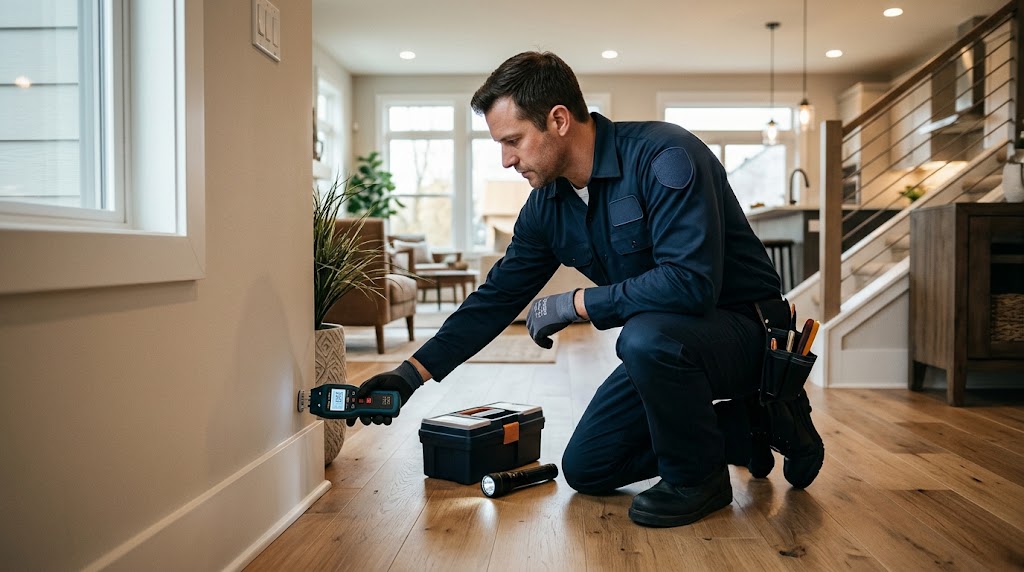
A hidden pipe leak behind drywall or beneath a concrete basement slab can quietly cause thousands of dollars in structural damage and mold growth. Our acoustic listening devices and thermal sensors locate leaks without tearing up your home.
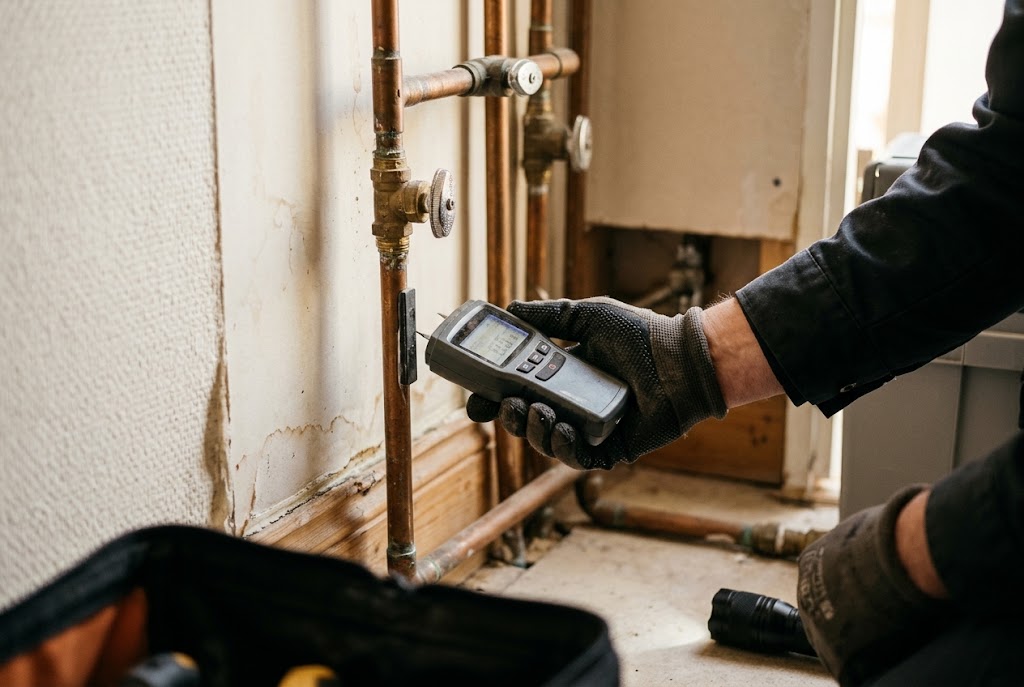
In cold northern climates like North Dakota, slab leaks and concealed pipe failures can be particularly treacherous. Water supply lines buried under concrete foundation slabs experience seasonal ground movements as frost penetrates deep into the soil and expansive prairie clays swell and contract. A pinhole in soft copper piping or a cracked compression fitting under a slab can discharge hundreds of gallons of pressurized water every day into foundation sub-gravel, washing out soil support and causing foundation settling.
Rather than tearing up hardwood flooring or jackhammering concrete based on guesses, our technicians deploy advanced non-invasive detection instrumentation. We use electronic ground microphones and frequency-filtered acoustic amplifiers that capture the microscopic sound vibrations of pressurized water escaping through pinholes. By filtering out ambient domestic noise, we track the exact sonic peak directly through concrete and tile.
To confirm findings, high-resolution infrared thermal imaging cameras map surface temperature differentials across floors, ceilings, and wall cavities. Cold supply leaks appear as distinct deep-blue temperature depressions, while hot water lines show vivid thermal blooms. This multi-spectrum verification allows us to plan surgical repairs with minimal disruption.
Our systematic leak detection process ensures fast, accurate resolution:
Ensure all faucets, showers, washing machines, and ice makers are turned off. Locate your municipal water meter. If the low-flow indicator triangle or digital dial continues spinning or registering consumption over a 20-minute period, pressurized water is escaping somewhere inside your system.
Slab leaks in our region are primarily caused by expansive clay soils that shift during freeze-thaw cycles, friction against concrete aggregate, poor original copper tubing installation, and aggressive mineral chemistry that causes pitting corrosion over decades.
No. Our electronic acoustic sensors and thermal imaging cameras are completely non-destructive and operate through finished flooring, tile, and drywall. Once the exact leak point is identified within inches, we create only a minimal, surgical access opening for the physical repair.