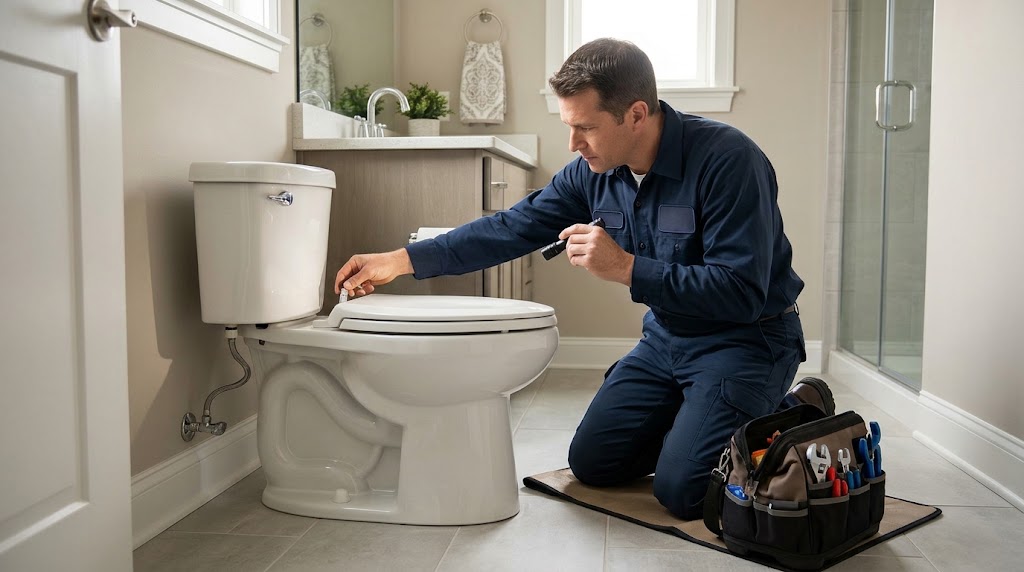
A malfunctioning toilet wastes water, damages subflooring, and creates daily household frustration. Our technicians provide fast, dependable repairs—from replacing worn wax seals and flush valves to installing high-efficiency toilets.
In cold climates, bathroom floors often experience subtle seasonal expansion and contraction between heated home interiors and frigid basement or crawlspace air underneath. Traditional petroleum wax rings can dry out, become brittle, or lose adhesion if a toilet bowl begins to rock even slightly on an uneven tile or vinyl floor. Once this hermetic seal fails, noxious sewer gases leak into living areas, while flush water slowly rots wooden subflooring and ceiling drywall below.
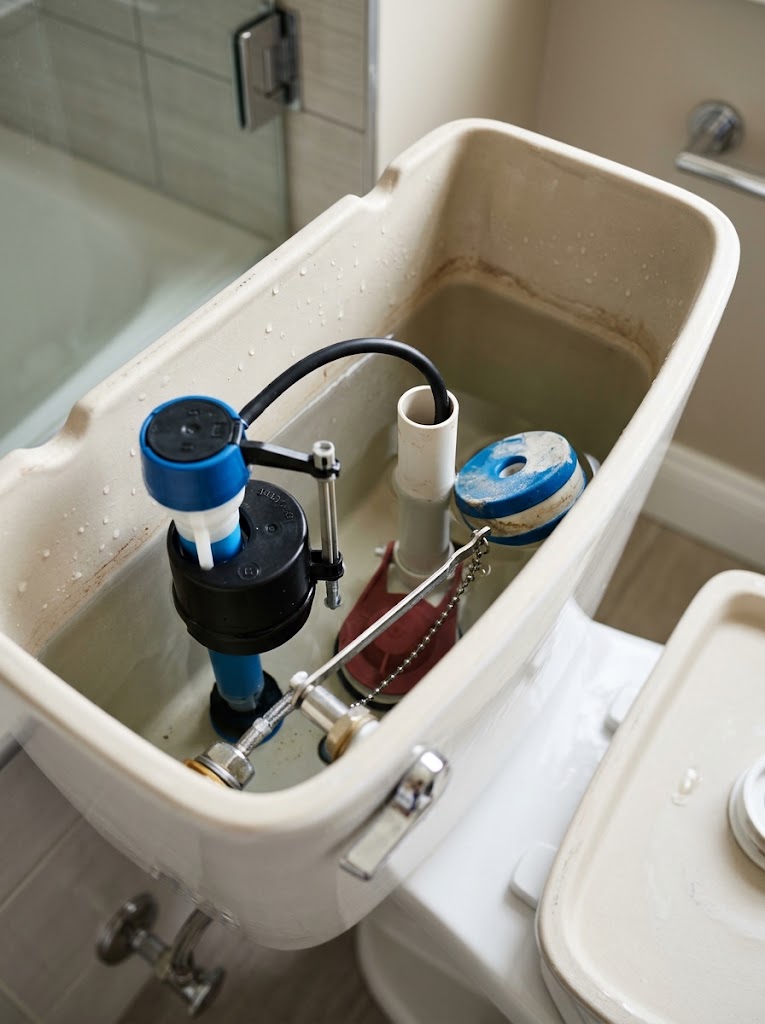
Furthermore, North Dakota's mineral-rich water takes a heavy toll on internal toilet tank mechanisms. High levels of dissolved calcium and chloramines deteriorate flexible rubber flappers, stiffen fill valve seals, and build up lime deposits inside rim siphon jets. This causes toilets to run continuously or initiate "ghost flushing" throughout the night, wasting hundreds of gallons of water every week.
We install heavy-duty chemical-resistant silicone flappers, commercial-grade anti-siphon fill valves, brass mounting hardware, and modern polyurethane wax-free gaskets that never degrade under thermal movement. For homes with outdated, water-guzzling 3.5-gallon units, we install WaterSense-certified high-efficiency toilets featuring glazed 2-1/8 inch trapways that eliminate frequent clogs.
When you call us for toilet troubleshooting or replacement, we follow a meticulous process:
Intermittent running, known as ghost flushing, is caused by a slow leak past the tank flapper or flush valve seal. Water slowly trickles from the tank into the bowl. When the water level drops below the fill line, the fill valve turns on for a few seconds to replenish it. Replacing the flapper resolves this issue.
No. A toilet should be completely firm and immobile. Even slight movement breaks the wax seal beneath the bowl, allowing wastewater to seep onto your wooden subfloor and letting sewer gas escape. Wobbling toilets require re-shimming, flange inspection, and new mounting hardware immediately.
If your toilet has hairline cracks in the porcelain, suffers from recurring clogs due to an unglazed small trapway, or is an older model that uses 3.5 to 5 gallons per flush, replacing it with a modern WaterSense high-efficiency unit will drastically cut water usage and prevent future clogs.